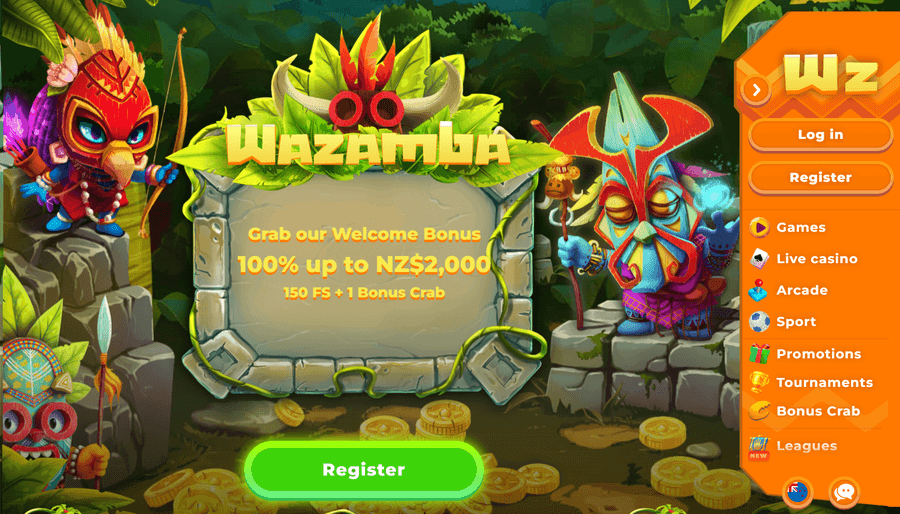
I still recall the mix of anticipation and gentle bewilderment the first time I sat down to open an online casino account. There were fields to fill, files to track down, and a subtle fear about whether my information would stay safe. What I learned since then is that enrollment at a operator like Wazamba Casino isn’t a obstacle intended to delay you. It’s a structured gateway that secures your money, your personal information, and your gaming experience from the initial click. I intend to guide you through in detail how the system operates, what you should have ready, and which minor choices make a big difference later on. If you’re brand new to online play or just want to know what sets this apart, I’ll present the full journey without skipping the practical bits. I’ll go over the sign-up form, the verification steps that come next, login protection, and the common snags that can catch you off guard. By the time you’re done reading, you’ll have a straightforward, practical map of the whole account creation flow at Wazamba Casino, and you’ll be aware of exactly what to look forward to before you even load the registration screen.
Guide to Log In and Reset a Forgotten Password
Accessing Wazamba Casino after registration is as easy as providing the email address and password I chose during sign-up, plus the two-factor code if I have it enabled. The login page also features a “remember me” option that places a secure cookie on my device, so I can avoid re-enter credentials every time I access from the same browser and location. If I ever lose my password, the recovery flow is straightforward: I select the “forgot password” link, input the email address tied to my account, and a reset link arrives in my inbox within a minute or two. I found out the hard way that these reset emails can sometimes land in the spam or promotions folder, so I always check those tabs if the message does not arrive in my primary inbox. Selecting the link takes me to a page where I can set a new password, and the system imposes the same complexity rules as the original sign-up. Once the password is reset, any active sessions on other devices are promptly terminated, which is a nice security touch. If the reset email never arrives, the most common culprits are a typo in the email address I entered or a delay from my email provider, and in those cases reaching customer support through live chat promptly resolves the issue. I also regularly saving my password in a reputable password manager so that I seldom need to utilize the recovery flow at all.
Picking Your Account Currency and Language
One choice that seemed minor at the time but became significant later was the pick of account currency. Wazamba Casino typically supports a range of currencies, including euros, US dollars, Canadian dollars, Norwegian kroner, and a selection of cryptocurrencies according to the region. I selected the currency I utilize for my daily banking because that eliminated conversion fees every time I funded or cashed out. If I had picked a currency different from my payment method’s native currency, my bank or the payment processor would have implemented its own exchange rate and potentially a foreign transaction fee, which can quietly eat into a bankroll over time. I also realized that once the currency is locked in during registration, the casino’s promotions, wagering requirements, and game balances all appear in that currency, so changing later is not a simple process. The language setting counted just as much. The platform presented several interface languages, and I picked the one I’m most comfortable with because all essential communications, like verification requests, bonus terms, and responsible gaming tools, are shown in that language. Switching the language later is easy from the account menu, but the initial choice determines the default for system emails, and I preferred to receive those in a language I fully grasp without depending on translation tools. Taking an extra minute to align my currency and language with my real-world habits saved me from confusion and unnecessary costs down the line.
What You Require Before You Start
Before I even arrived at the sign-up form, I made sure I had three items within arm’s reach: a valid government-issued ID, a recent proof of address, and a payment method registered in my own name. At Wazamba Casino, the registration itself only asks for a handful of basic details upfront, but the verification stage that follows will ask for those documents, and having them ready spares a surprising amount of time. I also double-checked that I fulfilled the minimum age requirement (typically eighteen or twenty-one depending on the jurisdiction that governs the licence) and that I was physically located in a region where the platform admits players. The casino’s terms page details supported and restricted territories, and I’d suggest glancing at that list before you invest any effort. Another practical step that assisted me was deciding on a single email address I’d use exclusively for my gaming account, because that maintains transaction receipts, bonus notifications, and security alerts separated from my everyday inbox. I also noted down the currency I intended to use, because once the account currency is set during registration, changing it later can be cumbersome or even impossible without closing the account and starting over. Having those few items sorted in advance transformed what could have been a stop-start session into a painless ten-minute task.
Configuring Two-Factor Authentication
As soon as my account was active, I headed straight to the security settings and turned on two-factor authentication. Wazamba Casino gave me the choice between an authenticator app like Google Authenticator or obtaining one-time codes via SMS, and I opted for the app because it does not rely on mobile network coverage and is generally more immune to SIM-swap attacks. Setting it up took under a minute: I read a QR code displayed on the screen with my authenticator app, the app generated a six-digit code, and I input that code back into the casino’s verification field to validate the link. From that point on, every login required not only my password but also the current code from my phone, which signified that even if someone somehow got my password, they could not access my account without physical possession of my device. I also stored the backup recovery codes that the system generated during setup and stored them in a secure offline location, because misplacing my authenticator app without those codes would deny me access to the account entirely. The whole feature introduced a negligible amount of time to my login routine, maybe five extra seconds, while increasing the barrier against unauthorised access. I consider two-factor authentication the most effective security setting a player can enable, and I was glad to see it displayed clearly during the registration flow rather than tucked away in an obscure menu.
Account Limits and Player Protection Tools
During my first session after registration, I took the time to explore the responsible gaming section in my account settings, and I was pleasantly surprised by the range of controls available. I could set daily, weekly, or monthly deposit limits that would stop any transaction going over the amount I specified, and those limits could be reduced instantly while any increase necessitated a cooling-off period of twenty-four hours or more. I also activated a session time reminder that appeared after a set number of minutes, gently nudging me to take a break and assess how long I had been playing. For players who want a stronger barrier, the platform provides a self-exclusion tool that can lock the account for a defined period (ranging from a few days to several months or indefinitely) during which login is completely disabled and marketing communications are stopped. I found it encouraging that these tools were not hidden away but were showcased as part of the account setup flow, because it demonstrated that the operator views player wellbeing as a core feature rather than an afterthought. I also observed a reality check feature that shows my net spend and session duration at regular intervals, which assisted me to keep a clear-eyed view of my activity. Setting these limits early, before any emotional attachment to a game session develops, is a habit I now recommend to every new player I interact with.
The Sequential Sign-Up Form
When I clicked the registration button on the Wazamba Casino homepage, the form appeared with a straightforward, single-page layout that requested my email address, a password of my choosing, and my preferred currency. Right away I noticed that the password field required a minimum length and necessitated a mix of letters, numbers, and a special character, which told me the platform views credential security strictly right from the start. After that initial block, the form progressed to collect my full name exactly as it shows on my identification document, my date of birth, my full residential address including postal code, and my mobile phone number. I devoted close attention to the name fields because even a small typo (a missing middle initial or a swapped first and last name) can cause a mismatch during the document verification step and delay my first withdrawal. The address field utilized a postcode lookup in some regions, which pre-filled the city and street, and that reduced the chance of manual error. I was also prompted to select a security question or to set up a two-factor authentication method, though that step was optional at the sign-up stage. Before I could proceed, I had to check a box confirming I was of legal age and that I acknowledged the terms and conditions, and I took care to actually opening the terms in a new tab to examine the withdrawal policy and bonus wagering rules. Once I clicked the create account button, a verification email arrived in my inbox within seconds, and clicking the link inside activated the account immediately.
Identity Verification and KYC
Soon after I submitted my opening deposit, I got a courteous email inviting me to complete the Know Your Customer process, which is a common regulatory requirement for regulated online casinos. I was required to upload a sharp colour copy of my passport or national ID card, confirming all four corners were displayed and that the photo and personal details were fully legible. For proof of address, I provided a recent utility bill or a bank statement dated within the last three months that showed my full name and the same residential address I had submitted during sign-up. The upload portal accepted PDF, JPEG, and PNG files, and it provided me with a real-time preview so I could check the document was readable before submitting. In my experience, the review took less than twenty-four hours, though during busy periods it can extend to forty-eight hours, and I got a confirmation email once the checks were finished. I also had to validate my payment method if I employed a credit or debit card, which meant submitting a photo of the card with the middle digits blocked out and only the last four digits and my name displayed. The KYC step is not voluntary (withdrawals remain on hold until verification is completely approved), so I handled it as a urgent task rather than something to postpone. Maintaining my documents arranged and copying them in high resolution beforehand rendered the whole process appear painless.
Common Registration Problems and Their Fixes
Even a smooth registration can encounter a few bumps, and I have seen most of them firsthand https://wazambaapp.com/fi-fi/login/. The most common issue I came across was the verification email not coming through, and the fix was almost always to look in the spam folder, pause five minutes, and then ask for a new activation email from the login screen. Another snag happened when the address I entered didn’t correspond to the format required by the postcode lookup. The form declined to continue until I typed the street name exactly as it shows in the official postal database; using short forms like “St.” instead of “Street” sometimes triggered a mismatch. A more significant problem emerged when the name on my payment method did not align with the name on my casino account, because even a middle initial difference can lead to a deposit to be blocked or a withdrawal to be paused. The solution there is to reach out to support early and provide documentation that ties both names, rather than waiting until a withdrawal is waiting. I also noticed that some players encounter trouble when they try to register from a restricted country while using a VPN; the system’s geolocation checks can flag the account, and the verification team will ask for additional proof of residence. If any error message shows up during sign-up, I advise taking a screenshot and recording the exact wording before reaching out to support, because that speeds up the diagnosis significantly. In every case I have witnessed, the support team was able to resolve the issue once the correct information was given.
Maintaining Your Account Safe Following Registration
Once my account was verified and my limits were set, I turned my attention to the ongoing habits that maintain an account secure far past the registration buzz fades. I confirmed the password I created was exclusive to Wazamba Casino and not reapplied from any other service, because credential stuffing attacks depend on the fact that many people recycle passwords across multiple sites. I also turned on login notifications via email, so I receive an alert every time a new device or IP address accesses my account, giving me an early warning if something looks off. On my home network, I maintain my router firmware updated and avoid logging into my casino account over public Wi-Fi unless I am using a trusted VPN, because open networks enable for bad actors to intercept data. I consistently review the active sessions list in my account settings and terminate any that I do not recognise, and I do not ever store my password in my browser if I use the device with anyone else. Phishing attempts are another actual risk, so I established a mental rule to not ever click on links in unsolicited emails that assert to be from the casino; instead, I input the address directly into my browser or utilize the official app. These subtle, consistent habits form a security net that functions alongside the platform’s built-in protections, and together they give me peace of mind every time I access.